
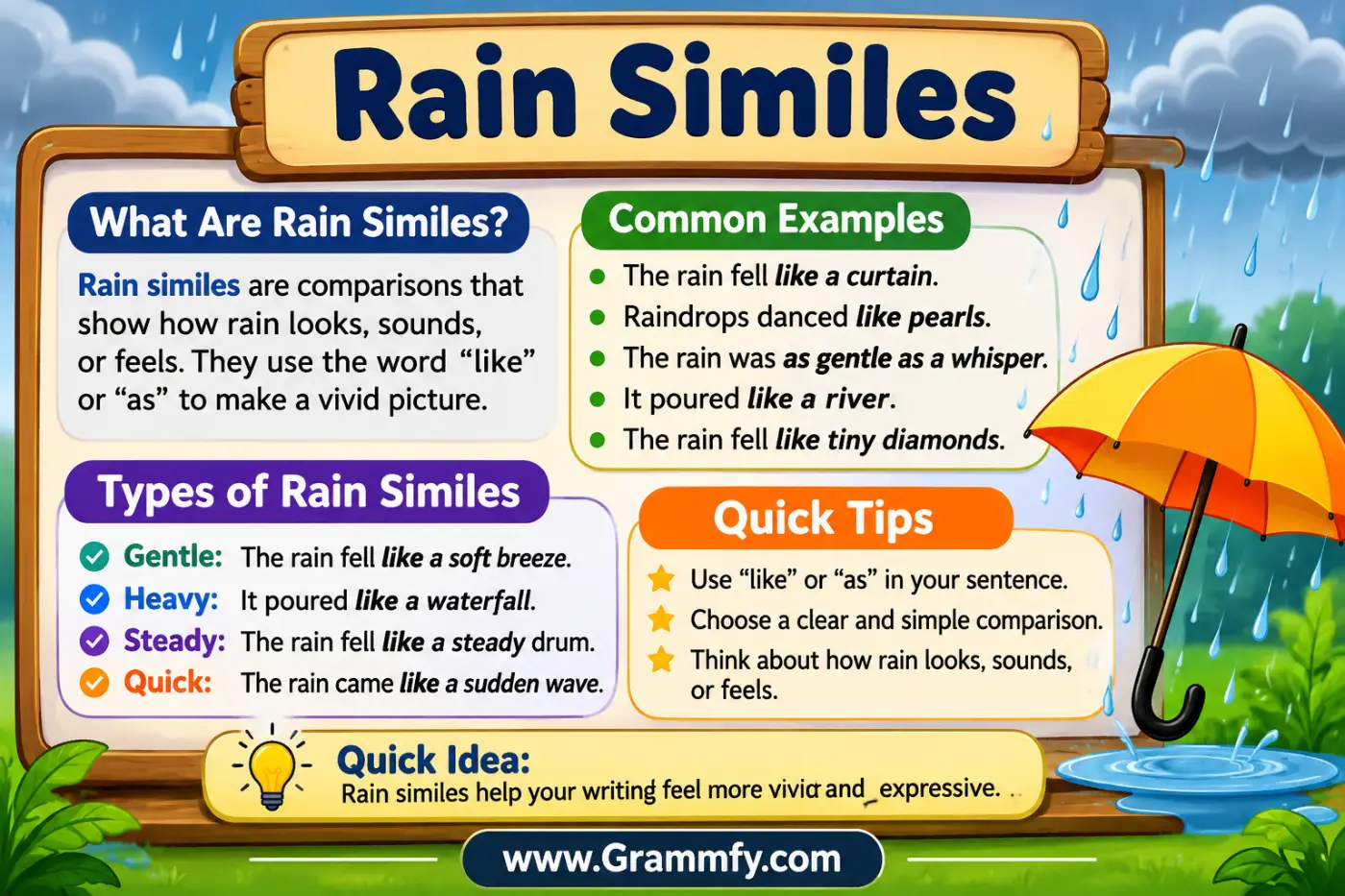
Have you ever watched raindrops slide down a window while writing a poem, story, or school essay? Finding the right words to describe that moment can be difficult. Rain Similes make your descriptions more colorful by comparing rainfall to familiar things, such as silver beads, dancing ribbons, or soft music.
A simile uses words like “as” or “like” to compare two different things. It helps readers imagine how rain looks, sounds, and feels.
A rain simile compares falling rain to another familiar thing using “like” or “as” to create a clear mental picture. For example, “The rain fell like silver strings from the sky.”
Writers use these comparisons to describe gentle showers, heavy storms, cloudy afternoons, and peaceful rainy days. Below, you’ll find creative examples, meanings, useful vocabulary, and simple tips for choosing the right comparison.
Need a more vivid way to describe luck? Explore our guide to creative luck similes and examples for fresh ideas and examples.

What Are the Best Rain Similes?
Here are 20 creative comparisons for describing different types of rainfall.
| No. | Simile | Meaning |
|---|---|---|
| 1 | Rain fell like silver beads. | Shiny raindrops |
| 2 | Rain sounded like a soft drumbeat. | Gentle rainfall |
| 3 | The rain poured like a waterfall. | Heavy rain |
| 4 | Raindrops danced like tiny ballerinas. | Playful rainfall |
| 5 | Rain fell like tears from the sky. | Sad or emotional weather |
| 6 | The shower was as gentle as a whisper. | Light rain |
| 7 | Rain tapped like fingers on the window. | Repeated raindrop sounds |
| 8 | The storm roared like a hungry lion. | Powerful storm |
| 9 | Rain streamed like ribbons from the clouds. | Continuous rainfall |
| 10 | The drizzle felt like a cool mist. | Very light rain |
| 11 | Raindrops sparkled like tiny diamonds. | Bright droplets |
| 12 | Rain fell like a curtain across the town. | Thick rainfall |
| 13 | The shower was like music on a rooftop. | Peaceful rain sounds |
| 14 | Rain rushed like a running river. | Fast-moving water |
| 15 | The clouds cried like broken hearts. | Emotional description |
| 16 | Rain scattered like pearls on the ground. | Small shining drops |
| 17 | The storm crashed like ocean waves. | Fierce rainfall |
| 18 | Rain floated like silver dust. | Fine, delicate drizzle |
| 19 | The drops fell as steadily as a ticking clock. | Consistent rainfall |
| 20 | Rain washed the streets like a giant cleaning brush. | Cleansing rainfall |
What Words Describe Rain?
These related words help you describe rainfall without repeating the same vocabulary.
| Word | Meaning | Tone | Example |
|---|---|---|---|
| Drizzle | Very light rain | Simple | A drizzle covered the garden. |
| Shower | Short period of rain | Everyday | A shower started suddenly. |
| Downpour | Heavy rainfall | Everyday | A downpour flooded the road. |
| Sprinkle | Light scattered rain | Simple | A sprinkle cooled the air. |
| Showering | Falling in small amounts | Everyday | Rain was showering outside. |
| Mist | Fine water droplets | Everyday | Mist covered the hills. |
| Storm | Strong, disturbed weather | Everyday | A storm approached the village. |
| Deluge | Extremely heavy rain | Formal | A deluge hit the region. |
| Torrent | Fast-flowing water | Formal | Water rushed like a torrent. |
| Precipitation | Water falling from the atmosphere | Scientific | Precipitation increased overnight. |
| Showering rain | Gentle or moderate rainfall | Everyday | Showering rain touched the leaves. |
| Cloudburst | Sudden, intense rainfall | Formal | A cloudburst surprised the hikers. |
| Sprinkle | A small amount of rain | Simple | A sprinkle fell at noon. |
| Rainstorm | Storm with rainfall | Everyday | The rainstorm lasted hours. |
| Wet weather | Weather with rain | Simple | Wet weather delayed the match. |
| Monsoon | Seasonal heavy rainfall | Regional | The monsoon brought heavy rain. |
| Sprinkle | Light drops | Informal | We got a little sprinkle. |
| Rainfall | Amount of rain received | Formal | Rainfall increased this month. |
| Shower | Brief rainfall | Everyday | A quick shower passed. |
| Cloudy | Covered with clouds | Simple | It was a cloudy morning. |
If you’re working on your grammar, you may also find every person or every people helpful.
What Are Rain Similes From Mild to Strong?
Different comparisons describe different levels of rainfall.
| Intensity | Comparison | Description |
|---|---|---|
| Mild | Like a soft whisper | Very light rain |
| Mild | Like floating mist | Fine drizzle |
| Gentle | Like fingers tapping glass | Soft rainfall |
| Gentle | Like scattered pearls | Small raindrops |
| Moderate | Like a steady drumbeat | Regular rainfall |
| Moderate | Like silver strings | Continuous rain |
| Strong | Like water pouring from a bucket | Heavy rain |
| Strong | Like a rushing river | Powerful rainfall |
| Extreme | Like a waterfall breaking loose | Very heavy rain |
| Extreme | Like the sky opening its floodgates | Intense downpour |
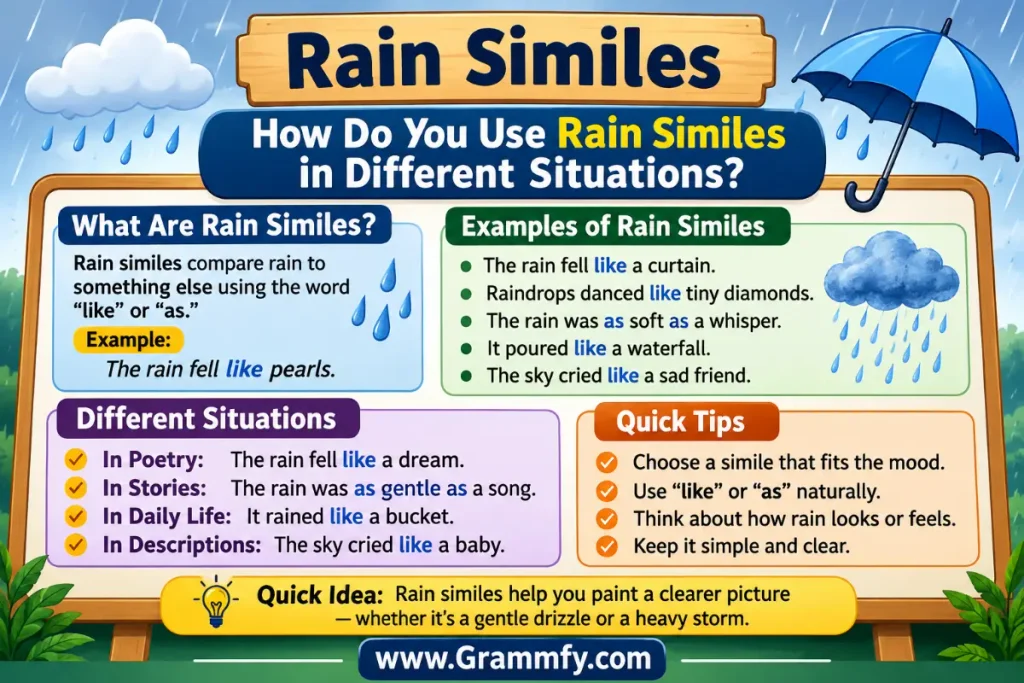
How Do You Use Rain Similes in Different Situations?
In Essays
Use clear and descriptive comparisons to make your writing interesting.
Example: “The rain fell like silver threads, covering the streets with sparkling water.”
In Stories
Use imaginative descriptions to create a scene.
Example: “The storm roared like a wild animal while the family watched from inside.”
In Text Messages
Keep your language short and natural.
Example: “It’s raining like someone turned on a giant shower!”
In Emails
Use simple, professional descriptions.
Example: “Heavy rain fell throughout the morning, causing delays in our journey.”
In Poems
Choose emotional and musical comparisons.
Example: “The rain whispered like a lonely heart beneath the cloudy sky.”
What Are 10 More Examples of Rain Similes?
- The rain fell like tiny silver needles against the roof.
- Raindrops bounced like little dancers on the pavement.
- The shower was as refreshing as a cool morning breeze.
- Rain poured like an endless stream from the clouds.
- The drops glittered like diamonds under the streetlights.
- The storm sounded like hundreds of drums playing together.
- Rain covered the windows like a transparent blanket.
- The drizzle moved like a soft veil across the fields.
- Heavy rain crashed like waves against the shore.
- The morning shower felt like a gentle kiss from the clouds.
What Is the Difference Between Drizzle and Downpour?
| Drizzle | Downpour |
|---|---|
| Very light rainfall | Extremely heavy rainfall |
| Small droplets | Large amounts of water |
| Often feels gentle | Can cause flooding |
| Example: Rain fell like a soft mist. | Example: Rain poured like a waterfall. |
Simile vs. Metaphor: What’s the Difference?
Both figures of speech create comparisons, but they work differently.
- Simile: The rain fell like silver threads.
- Metaphor: The rain was silver threads.
A simile uses comparison words, while a metaphor describes one thing as another.
What Are the Opposite Words of Rain?
Rain-related opposites describe dry or sunny conditions.
- Dryness
- Drought
- Sunshine
- Clear skies
- Aridity
- Dry weather
Example: “After days of rain, the sunshine returned like a warm welcome.”
What Mistakes Should You Avoid When Writing Rain Comparisons?
- Avoid confusing comparisons: Make sure readers understand the image.
- Don’t repeat the same words: Use different descriptions for gentle and heavy rainfall.
- Don’t mix similes and metaphors: Remember that similes use “like” or “as.”
- Avoid unnecessary exaggeration: A light drizzle shouldn’t sound like a destructive storm.
- Match the mood: Use peaceful comparisons for calm scenes and powerful ones for storms.
How Can You Choose the Best Rain Simile?
- Identify the rainfall: Decide whether it’s a drizzle, shower, or downpour.
- Choose a suitable image: Think about music, nature, water, or everyday objects.
- Match the mood: Use gentle comparisons for peaceful scenes.
- Keep it simple: Choose words your readers understand.
- Read it aloud: Make sure the sentence sounds natural.
- Avoid repetition: Try fresh comparisons instead of using the same image repeatedly.

Conclusion
Rain can create peaceful mornings, dramatic storms, and beautiful moments. The right comparison helps readers experience these scenes through words. Rain Similes make descriptions more vivid by connecting falling water to familiar things like silver beads, dancing ribbons, soft music, and flowing rivers. Remember to choose your comparison according to the type of rainfall and the mood you want to create. A gentle drizzle needs a different description from a powerful storm. You can use these expressions in poems, stories, essays, and everyday conversations. Keep your sentences natural, avoid unnecessary repetition, and experiment with original images. A simple comparison can make an ordinary rainy day unforgettable.
Frequently Asked Questions
1. What is a good simile for rain?
“Rain fell like silver beads from the sky” is a good simile because it creates a clear picture of shining raindrops.
2. What is a simile for heavy rain?
“Rain poured like a waterfall” describes heavy rainfall with a strong visual comparison.
3. What’s another way to describe gentle rain?
You can describe gentle rain as “soft as a whisper” or “like a cool mist drifting through the air.”
4. What are some creative Rain Similes for poetry?
Try “rain whispered like a lonely heart” or “raindrops danced like tiny ballerinas.” These comparisons create emotional and imaginative images.
5. How do you describe the sound of rain?
You can compare it to a drumbeat, soft music, fingers tapping glass, or tiny stones hitting a rooftop.
6. What is a funny simile for rain?
“It’s raining like someone forgot to turn off the shower” is a funny and easy comparison.
7. How can children learn to write rain similes?
Ask children to compare raindrops with familiar objects, such as beads, pearls, drums, or dancing people. Encourage them to use “like” or “as” in their sentences.

Tylerbrooks is a US-based English grammar writer and contributor at Grammfy. He writes helpful articles about grammar, spelling, commonly confused words, and vocabulary. His goal is to explain English topics in simple language with clear examples and practical tips. Through his articles, he helps readers improve their writing and everyday English skills.